


Interested in becoming a technical writer?
You may be wondering whether you need a certification to get started.
It's a reasonable question. Many careers require a license, exam or specific credential before you can work in the field.
Technical writing is different.
Here's what you need to know about ...
-
technical writing credentials
-
what employers look for
-
how the right training can help you build the skills and portfolio to pursue new opportunities
Do You Need a Technical Writing Certification?

The short answer ... no, you don't need a certification.
In the United States, technical writers don't need a professional license or certification to work in the field. The U.S. Bureau of Labor Statistics describes certification as "not mandatory."
What matters more to employers is your ability to do the job.
That means ...
-
demonstrating strong writing skills
-
understanding the subject you're writing about
-
being able to learn from technical experts and turn complex information into clear, useful content
Certificate vs. Certification: What's the Difference?

If you're comparing technical writing programs, you'll encounter several similar-sounding credentials. Understanding the differences can help you choose training that fits your goals.
The U.S. Department of Labor's CareerOneStop distinguishes between certificates earned through education and certifications typically earned by passing an exam.
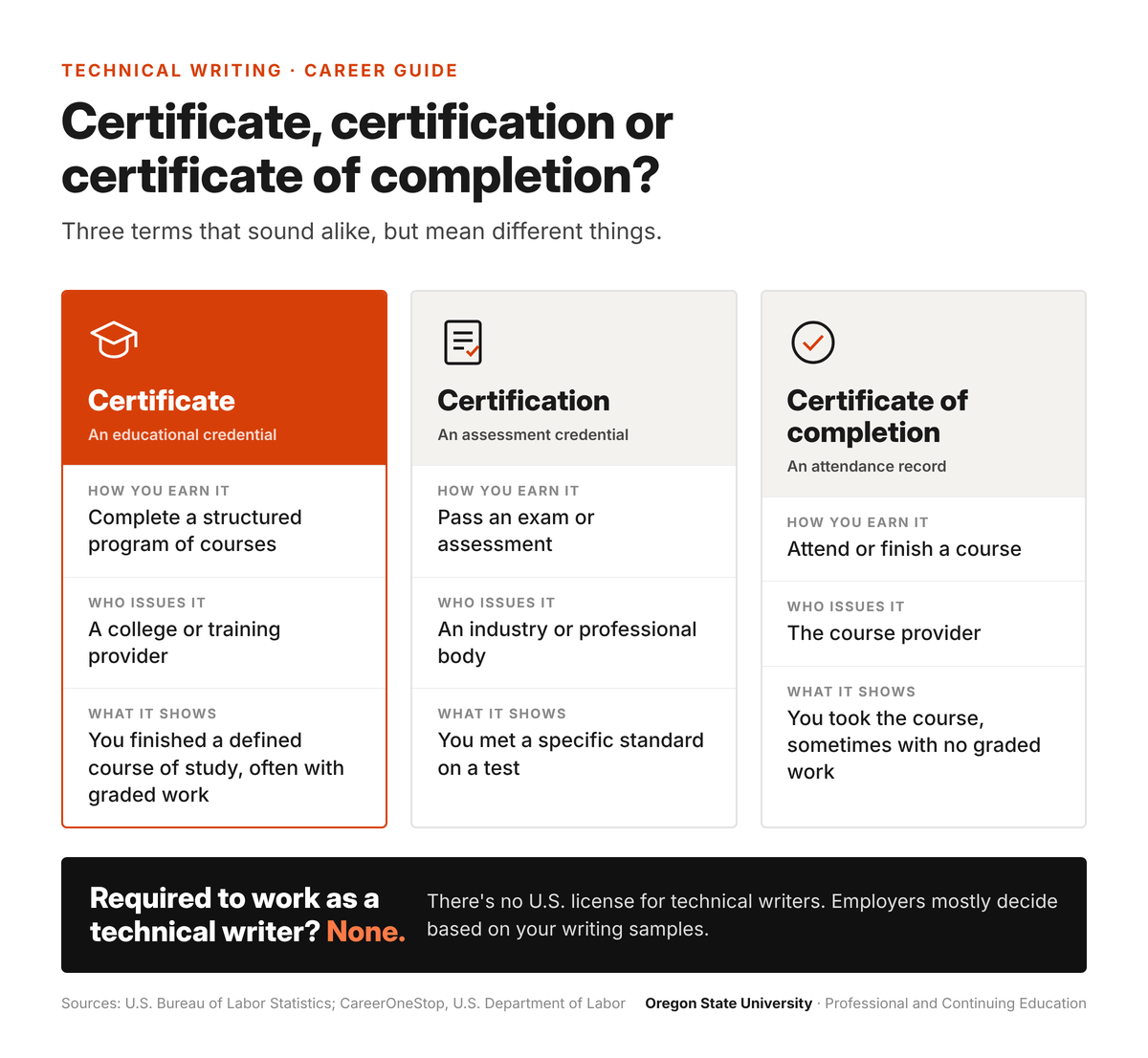
- Certificate: Earned by completing a structured educational program, often with assignments and graded work.
- Certification: Typically earned by passing an exam administered by an industry or professional organization.
- Certificate of completion: Confirms that you completed a course, which may or may not include graded assignments.
None of these credentials is a license required to work as a technical writer.
When evaluating a program, look beyond the credential's name. Find out who issues it, what you need to do to earn it, and what practical skills you'll develop along the way.
What Do Employers Look for in Technical Writers?
Requirements vary by industry and employer, but five factors can make a difference when you're applying for technical writing jobs.
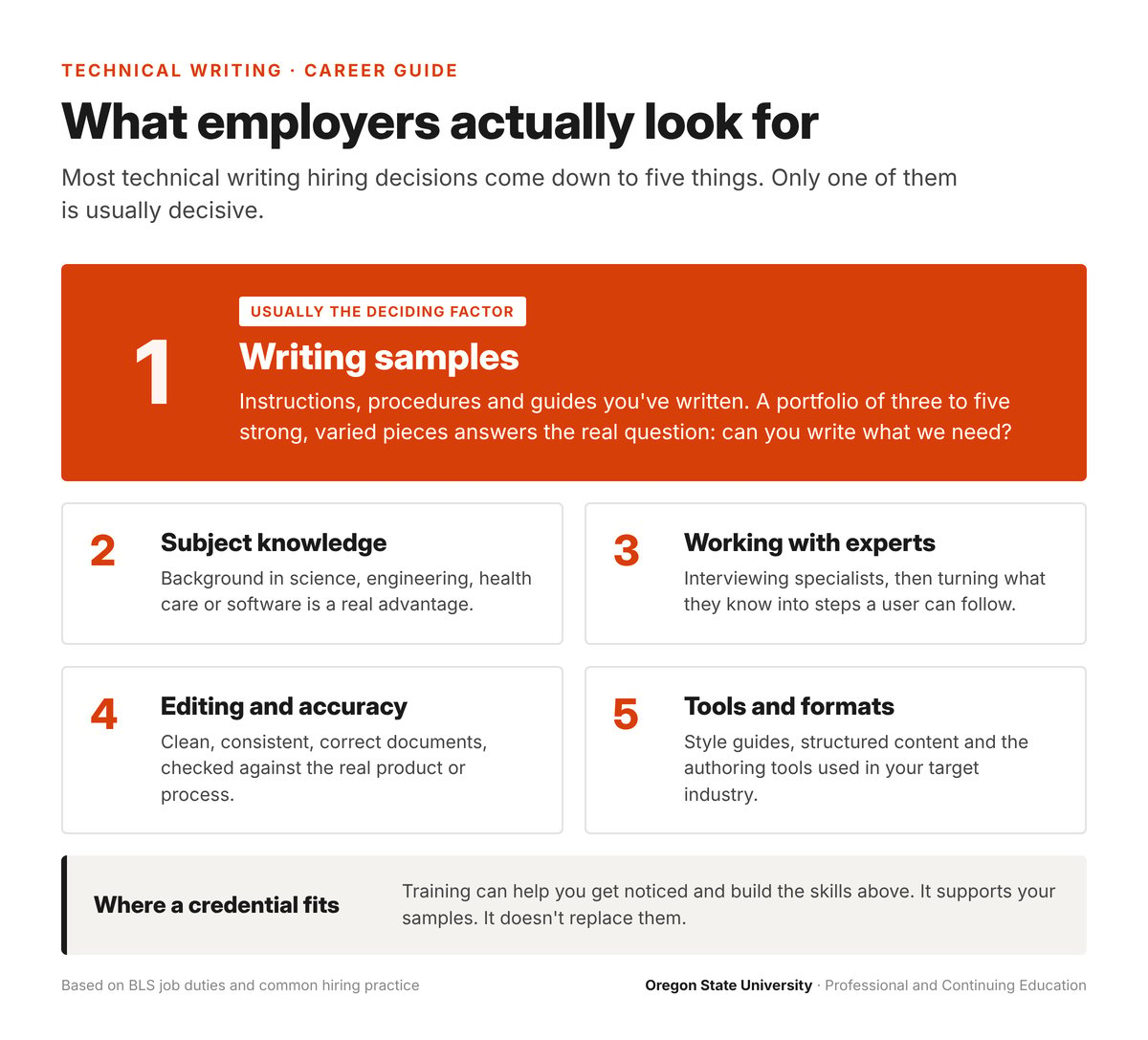
- A portfolio of writing samples: Employers want to see that you can create clear, effective instructions, procedures, guides and other technical documents. Your portfolio is often one of the most important parts of your application.
- Subject knowledge: Familiarity with a technical field, such as science or engineering, can be an advantage.
- Communication skills: Technical writers work with subject matter experts, including engineers, scientists and clinicians, to translate specialized knowledge into information people can understand and use.
- Editing and attention to detail: Accuracy, consistency and clear organization are essential when people rely on your documents.
- Knowledge of tools and formats: Depending on the role, you may need experience with style guides, structured content and industry-specific authoring tools.
A certificate can help demonstrate that you've completed relevant training. But employers also want evidence that you can put those skills into practice.
That's why choosing a program that emphasizes hands-on writing and feedback can be a valuable step toward your career goals.
Why a Technical Writing Portfolio Matters

When hiring managers review your application, they want to know one thing: Can you write the documents we need?
A portfolio gives them a way to evaluate your skills before hiring you.
A strong portfolio might include three to five varied samples, such as:
-
step-by-step instructions
-
a standard operating procedure (SOP)
-
an overview explaining how something works
-
an example of how you've improved an existing document
You don't need professional experience to get started. Learn how to build a technical writing portfolio with no job experience.
Already work in a lab, clinic or manufacturing environment? Your experience creating procedures, protocols or reports may give you a head start.
Explore how to move from the lab or clinic into technical writing, and learn why precise writing matters for grants, contracts and SOPs.
Is a Technical Writing Certificate Worth It?

A certificate program can be a worthwhile investment when it helps you develop practical skills, build a portfolio and prepare for the kinds of work employers need.
Look for a program that offers:
- Personalized instructor feedback: Get guidance on your writing and learn how to improve your drafts.
- Practical writing assignments: Create portfolio-ready documents instead of simply watching lessons or reading about technical writing.
- A structured learning path: Build your skills step by step, with deadlines and milestones to help you stay on track.
- A recognized credential: Demonstrate that you've completed relevant training while building evidence of your abilities.
Technical writing can offer opportunities across a range of industries.
The U.S. Bureau of Labor Statistics reports a median annual wage of $90,390 for technical writers in May 2025 and projects approximately 3,200 openings per year through 2035, largely due to workers leaving the occupation or changing careers.
Employment growth is projected to be flat, making practical skills, relevant subject knowledge and a strong portfolio especially important when preparing to compete for available roles.
Considering the time and cost involved? Read our guide to whether a technical writing certificate is worth it.
You can also explore how AI is changing technical writing in 2026.
How to Choose a Technical Writing Program

Technical writing training ranges from free introductory courses to short online programs and university certificate programs.
The right choice depends on your goals, budget and current experience.
Before enrolling, ask four questions:
- Will an instructor review my writing? Lessons can introduce concepts, but personalized feedback helps you identify mistakes and strengthen your skills.
- How much hands-on practice is included? Look at the number and variety of documents you'll write, not just the number of lessons or videos.
- Will I finish with portfolio-ready samples? Look for assignments that help you demonstrate your abilities to potential employers.
- What credential will I earn? Understand whether the program awards a certificate, certification or certificate of completion, and who issues it.
If you're still exploring the field, start with these free technical writing courses and resources.
If you're ready to invest in your skills, consider a program that combines structured instruction, instructor feedback and practical projects you can use to demonstrate your abilities.
How Oregon State's Technical Writing Certificate can help

Oregon State University's online Technical Writing Certificate is a non-credit university certificate program that awards 16 continuing education units (CEUs).
The program focuses on developing practical skills you can apply to your work and demonstrate to potential employers.
- Weekly instructor feedback: Oregon State writing instructors review every assignment to help you improve your work.
- A portfolio you can share: Complete five four-week courses and finish with a WordPress portfolio showcasing your writing.
- Flexible entry requirements: No degree or prior experience is required, and there are no set class times.
- Flexible ways to get started: Explore the Free Intro to Technical Writing, or enroll in an individual course for $499.
Graduates have gone on to roles including Technical Content Coordinator at Intel and Clinical SOP Writer at Providence Health.
Graduate April Ponto describes how enrolling in the program helped her gain visibility with potential employers: "As soon as I enrolled in this class and put [it] on my résumé... then I was being contacted