


Instructional design salaries can vary widely depending on where you work.
Someone at a technology company, hospital, federal agency or university may do similar work but earn a different salary.
Salary estimates can also look different from one website to another because sources measure pay in different ways. This guide brings together several useful figures and explains how salaries can vary by industry, experience and location.
The Short Answer
In a 2023 survey of 518 full-time instructional designers in the United States, the average salary was about $83,000. About one in five respondents earned $100,000 or more.
Government data for related jobs shows somewhat lower figures. The sections below explain why the numbers differ.
Instructional Design Salary by Industry
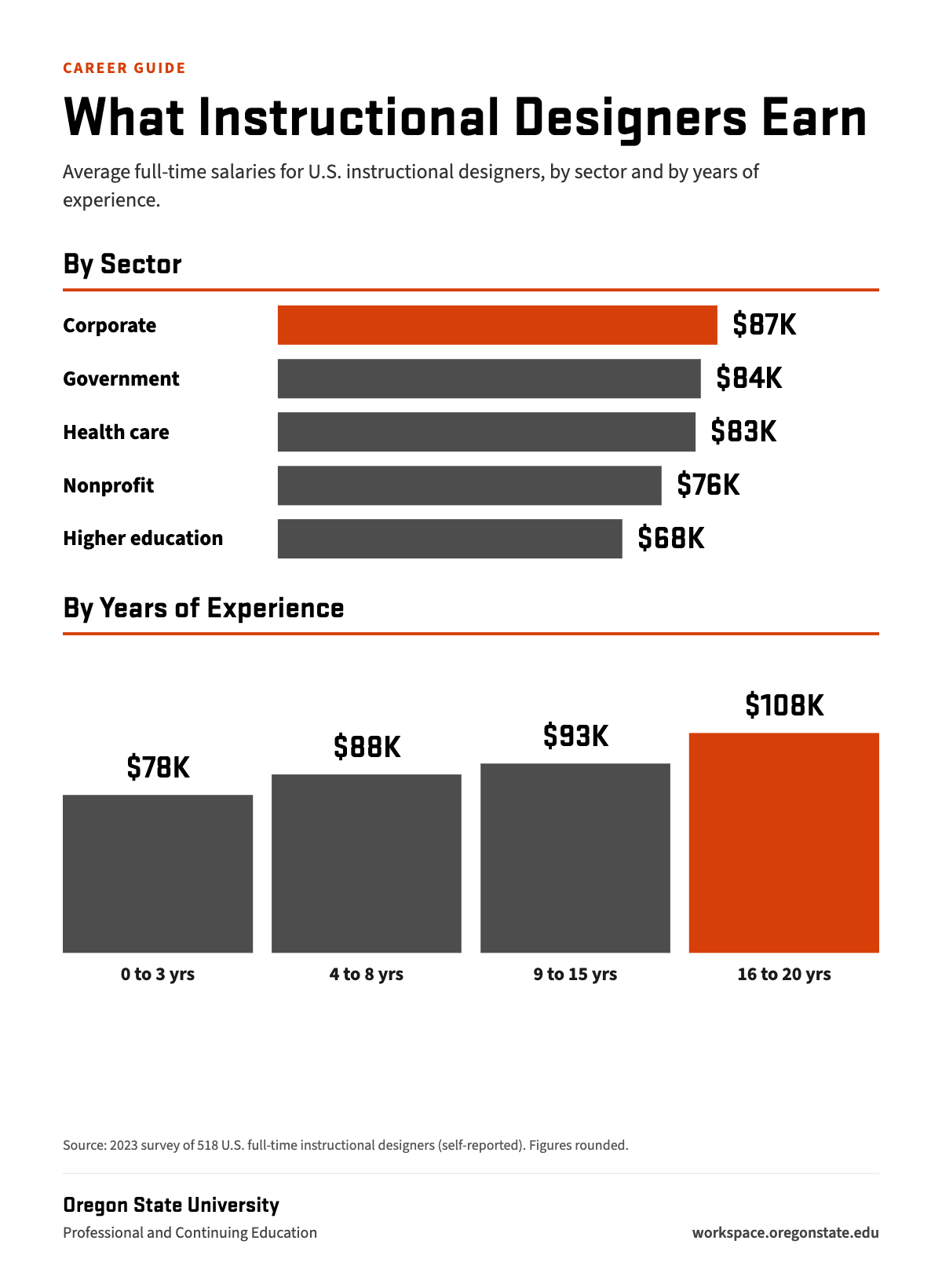
The 2023 survey reported these average salaries for full-time instructional designers:
| Industry | Average salary |
|---|---|
| Corporate | $87,384 |
| Government | $84,095 |
| Health care | $83,092 |
| Nonprofit | $76,335 |
| Higher education | $68,474 |
Corporate roles had the highest average salary in this survey.
Higher education roles averaged less, though some people value the schedule, benefits, tuition benefits and mission. The survey included a relatively small number of higher education respondents, so use that figure as a general guide rather than a guarantee.
Salary by Experience
Experience is another important factor. In the same survey, average full-time salaries increased as designers gained experience:
- 0 to 3 years: about $78,000
- 4 to 8 years: about $88,000
- 9 to 15 years: about $93,000
- 16 to 20 years: about $108,000
Your first job is a starting point, not a limit on what you can earn. As you gain experience and build your skills, you may qualify for more advanced roles.
What Government Salary Data Shows

The U.S. Bureau of Labor Statistics (BLS) doesn't track instructional designers as a separate occupation. Instead, their work may fall under several related job categories.
The figures below use May 2025 wage data and projections through 2035.
| Related occupation | Median pay | Projected growth |
|---|---|---|
| Training and development specialists | $69,280 | 11%, about 46,000 openings a year |
| Instructional coordinators | $77,440 | 2% |
| Training and development managers | $133,000 | 6%, about 4,100 openings a year |
Why are these figures lower? The training and development specialist category includes many jobs beyond instructional design, such as trainers and training coordinators. That can bring the median down compared with a survey focused on instructional designers.
The BLS also reports the median, or midpoint, while surveys often report the average, which can be pulled higher by people earning more. Training and development manager salaries also show one possible path for designers who move into learning strategy and team leadership.
Federal Instructional Design Jobs

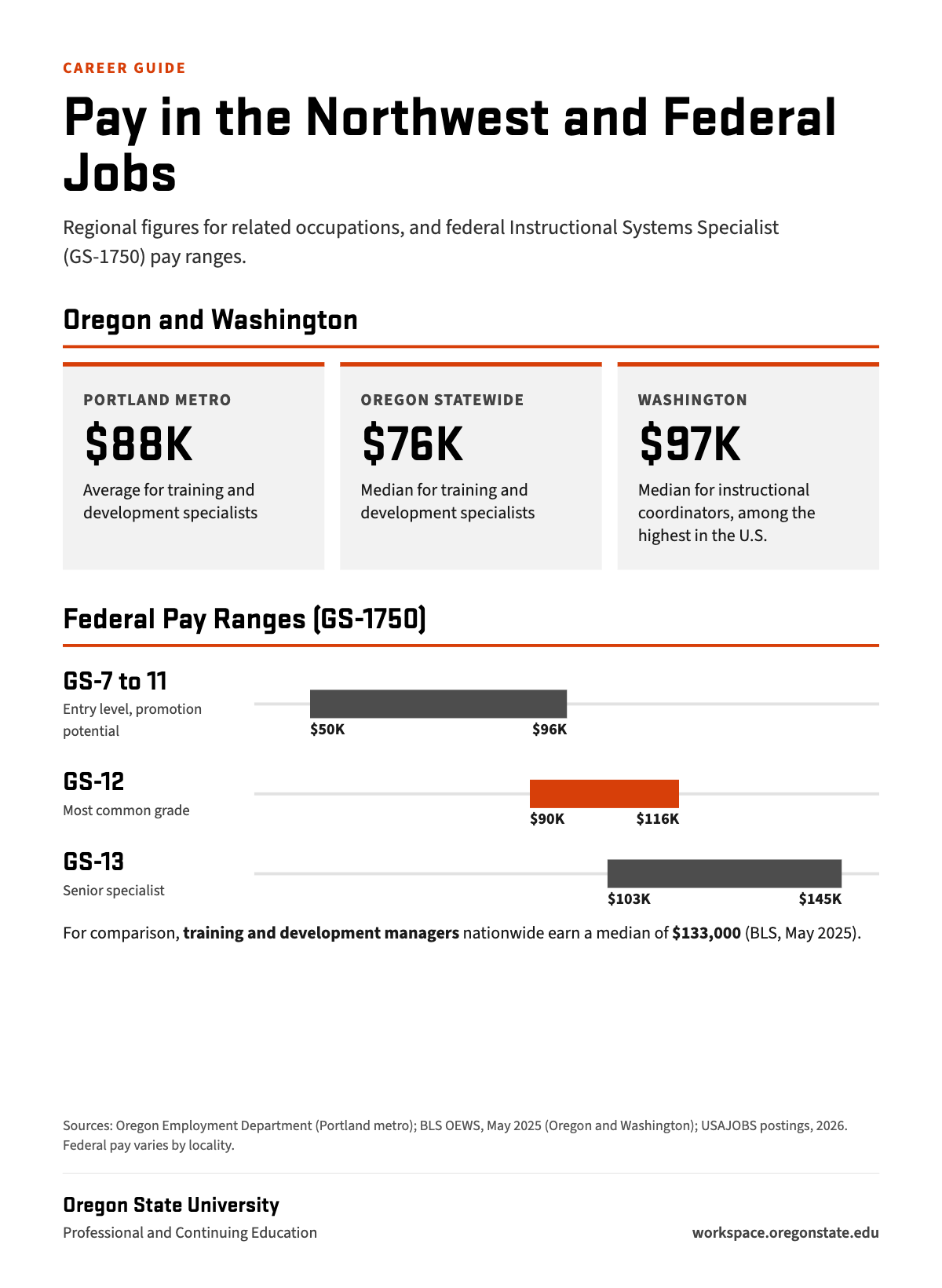
Many federal instructional design roles fall under the Instructional Systems Specialist series (GS-1750). Recent USAJOBS postings show approximate salary ranges such as:
- GS-7 to GS-11, entry-level roles with promotion potential: about $50,000 to $96,000
- GS-12: about $89,500 to $116,400
- GS-13: about $103,400 to $145,500
Federal salaries vary by location because many areas receive an additional locality adjustment.
These positions also have education and coursework requirements, so review the qualifications listed in each job posting.
Instructional Design Salaries in Oregon and the PNW

- Portland metro: Training and development specialists earn an average of about $42 an hour, or roughly $88,000 a year, according to the Oregon Employment Department.
- Oregon statewide: The median salary for training and development specialists is about $76,000 a year.
- Washington: Instructional coordinators earn a median of about $97,000, among the highest in the country.
Freelance and Contract Rates

Some instructional designers work as freelancers, either full time or alongside another job. Hourly rates depend on experience, specialty and client. Typical ranges may include:
- Getting started: about $35 to $45 an hour
- A few years of experience: about $45 to $75 an hour
- Experienced specialists: $100 an hour or more
Freelance marketplaces with clients and workers around the world may show lower rates overall. U.S.-based profiles on those platforms often fall in the $40 to $75 an hour range.
What Can Help You Earn More?
- Experience: Pay tends to rise as you build skills and take on more complex work.
- Industry: In this survey, corporate, government and health care roles paid more on average than nonprofit and higher education roles.
- A strong portfolio: Work samples help employers see what you can do, especially when you're starting out, and may support salary negotiations.
- In-demand skills: Experience with tools such as Articulate Storyline, plus accessibility, data analysis and evaluation skills, can strengthen your qualifications.
- Advanced education and leadership: A master's degree and experience leading projects or teams can help you qualify for senior and management roles.
Start Building Your Instructional Design Career

Oregon State's E-Learning Instructional Design and Development Certificate helps you build practical skills and a portfolio.
You'll receive feedback from experienced instructors and complete a practicum project of your own.
The program is 100% online, takes about 3 to 6 hours a week, and doesn't require an application. Six units can also count toward a partner online master's degree in learning design and technology.
Wondering where to begin?
Take the free 3-minute Skill Gap Analyzer to explore the skills you already have and identify a possible next step.
Frequently Asked Questions

What is the average instructional designer salary?
In a 2023 survey of full-time instructional designers in the United States, the average salary was about $83,000. Government data for related occupations reports median salaries ranging from about $69,000 to $77,000.
How much do entry-level instructional designers earn?
In the same survey, designers with 0 to 3 years of experience averaged about $78,000. Actual pay varies by industry and location. Entry-level roles in higher education and nonprofits may pay less.
Can instructional designers earn six figures?
Yes. About one in five designers in the survey earned $100,000 or more. Higher salaries were generally associated with more experience, corporate or government roles, and senior or leadership positions.
Do corporate instructional designers earn more than those in higher education?
In the 2023 survey, corporate instructional designers averaged about $87,000, compared with about $68,000 in higher education. Some people choose higher education for its benefits, schedule and mission, even when the average salary is lower.